The thirty-five-degree sweep over Rogers Dry Lake.
Plate 06 · 18 May 1953 · Edwards / Rogers Dry Lake, Calif. · Canadair Sabre Mk 3 (Orenda Turbojet) · 652.337 MPH · Source: National Air and Space Museum
The Sabre’s swept wing is easy to recognize in a photograph, but the reason for its shape lives in the air moving around it.
As an aircraft approaches the speed of sound, local airflow can become supersonic before the whole airplane does. Shock waves change lift and drag, and can make familiar controls behave differently. The F-86 family’s low wing swept back at 35 degrees helped delay these effects. Its open nose intake fed the jet engine, and a teardrop bubble canopy gave the pilot a clear view outside.
The all-flying horizontal tailplane helped retain pitch control in the transonic region, where shock waves could reduce the effectiveness of a conventional elevator. These were practical answers to a changing airflow, not decorative choices. The Canadair Sabre carried the same recognizable arrangement into a Canadian-built aircraft, with the single Mk 3 test machine powered by an Avro Canada Orenda turbojet.
On 18 May 1953, civilian pilot Jacqueline Cochran flew that aircraft over Rogers Dry Lake at Edwards in California. She established a 100-kilometer closed-course world record of 652.337 miles an hour and also passed Mach 1 in a dive, becoming the first woman to break the sound barrier. The recorded average around a measured course and the supersonic dive are related achievements, but they are different measurements.
Keeping those measurements separate makes the flight easier to understand. The course record tells us what she sustained over a defined distance; the dive marks passage through the sound barrier. In the aircraft’s outline, the swept wing and moving tail explain how control was maintained as the airflow changed.
Garments Drawn from This Plate
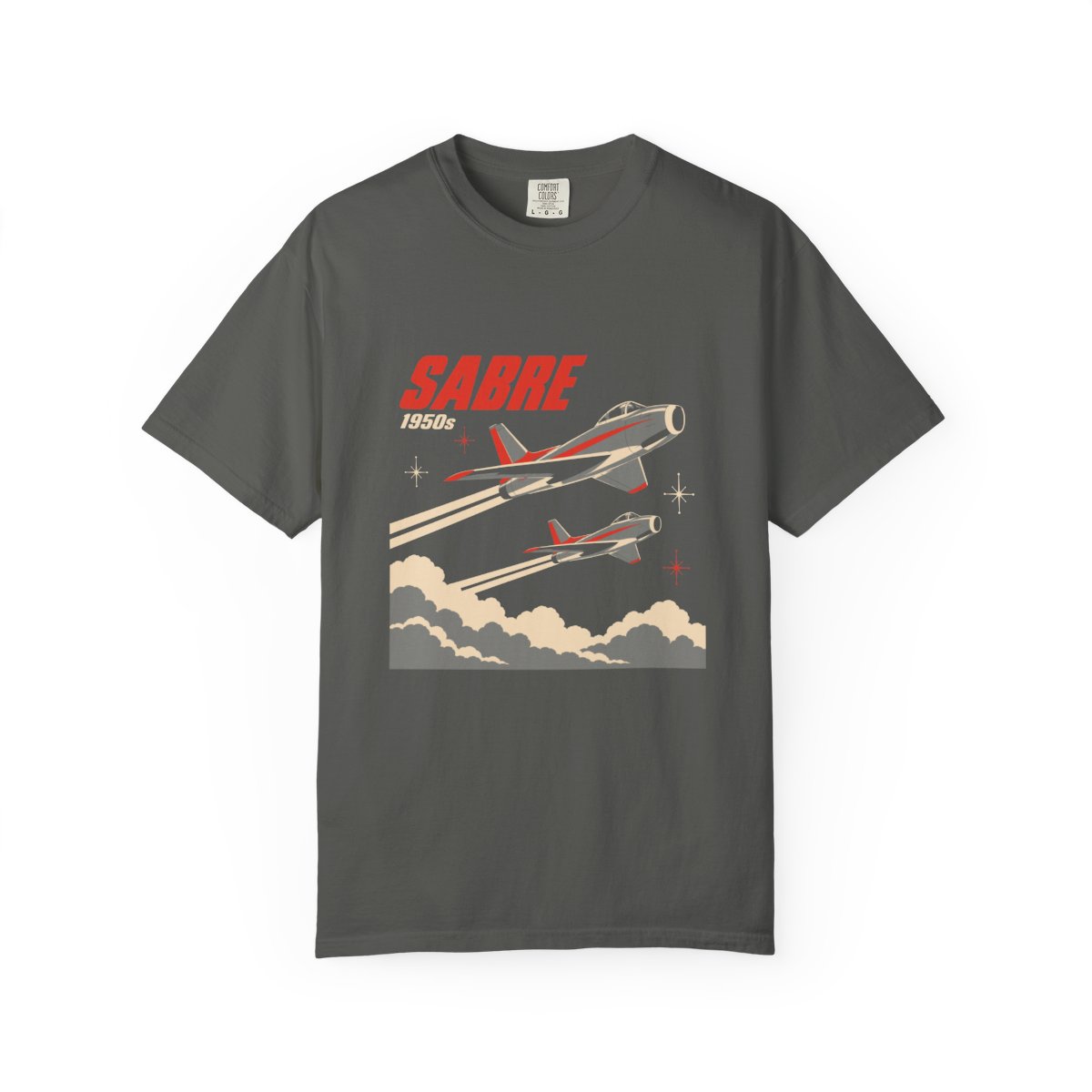
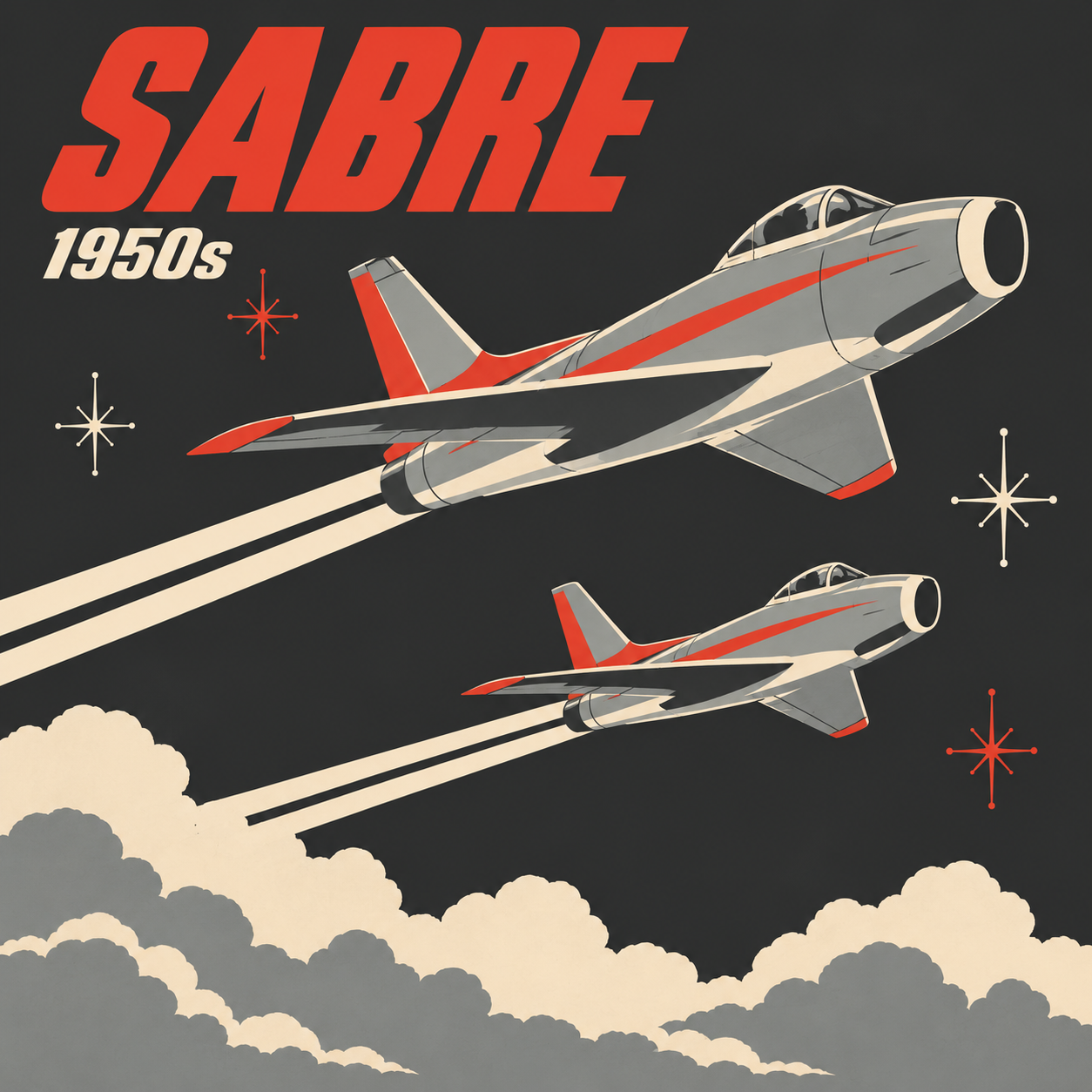
Mach 1 Sabre Heavyweight Tee
Canadair Sabre Mk 3 (F-86) · Comfort Colors 1717 · 6.1 oz garment-dyed heavyweight cotton (Pepper Charcoal, Black, Navy)

Mach 1 Hoodie
Canadair Sabre Mk 3 (F-86) · On 18 May 1953 Jacqueline Cochran became the first woman to fly faster than sound. The National Air and Space Museum says she did it in a borrowed Canadair F-86, because the military jets other people were using were not available to a civilian woman. At her death in 1980 the museum records that she held more speed, altitude, and distance records than any other pilot. Chuck Yeager coached her; this is not his hoodie. Her name stays in the story. The chest is MACH 1 and the date. Hoodie, sixty-eight dollars.