Sixty days in San Diego, and thirty-three hours to Paris.
Plate 03 · 20-21 May 1927 · Roosevelt Field, N.Y. to Le Bourget, Paris · 33 Hours 30 Minutes / 3,610 Miles · Source: Smithsonian National Air and Space Museum
Before the flight became a photograph of a crowd in Paris, it was about sixty days of work in a small aircraft factory in San Diego.
In the spring of 1927, chief engineer Donald A. Hall and the crew at Ryan Airlines designed and built the custom Ryan NYP, drawing on the company’s earlier M-2. The high-wing monoplane had to carry enough fuel for an ocean crossing while remaining light enough to leave the ground. Its uncowled, nine-cylinder Wright J-5C Whirlwind radial engine produced 223 horsepower. Reliability mattered more than an impressive top speed.
The largest fuselage fuel tank held 209 gallons. Hall placed it ahead of the cockpit, behind the engine, rather than behind the pilot where its mass might drive forward into him during a crash. That decision removed the front windshield altogether. Charles Lindbergh looked out through side windows and used a sliding periscope for a limited view ahead. The airplane’s blunt metal nose records the compromise in plain sight.
At 7:52 a.m. on 20 May, Lindbergh left muddy Roosevelt Field on Long Island with 450 gallons of fuel aboard. The heavily loaded airplane used a long takeoff run before beginning the North Atlantic crossing. Night fog and icing reduced visibility, while fatigue became another problem to manage inside a cockpit built for one person. The machine kept flying because its structure, engine and fuel system had been arranged around that single journey.
At 10:22 p.m. local time on 21 May, he landed at Le Bourget Aerodrome outside Paris. The nonstop flight had taken 33 hours and 30 minutes and covered about 3,610 miles. Remembering the people who built the aircraft gives that familiar arrival a fuller beginning: the ocean crossing rested on decisions made at workbenches in San Diego.
Garments Drawn from This Plate
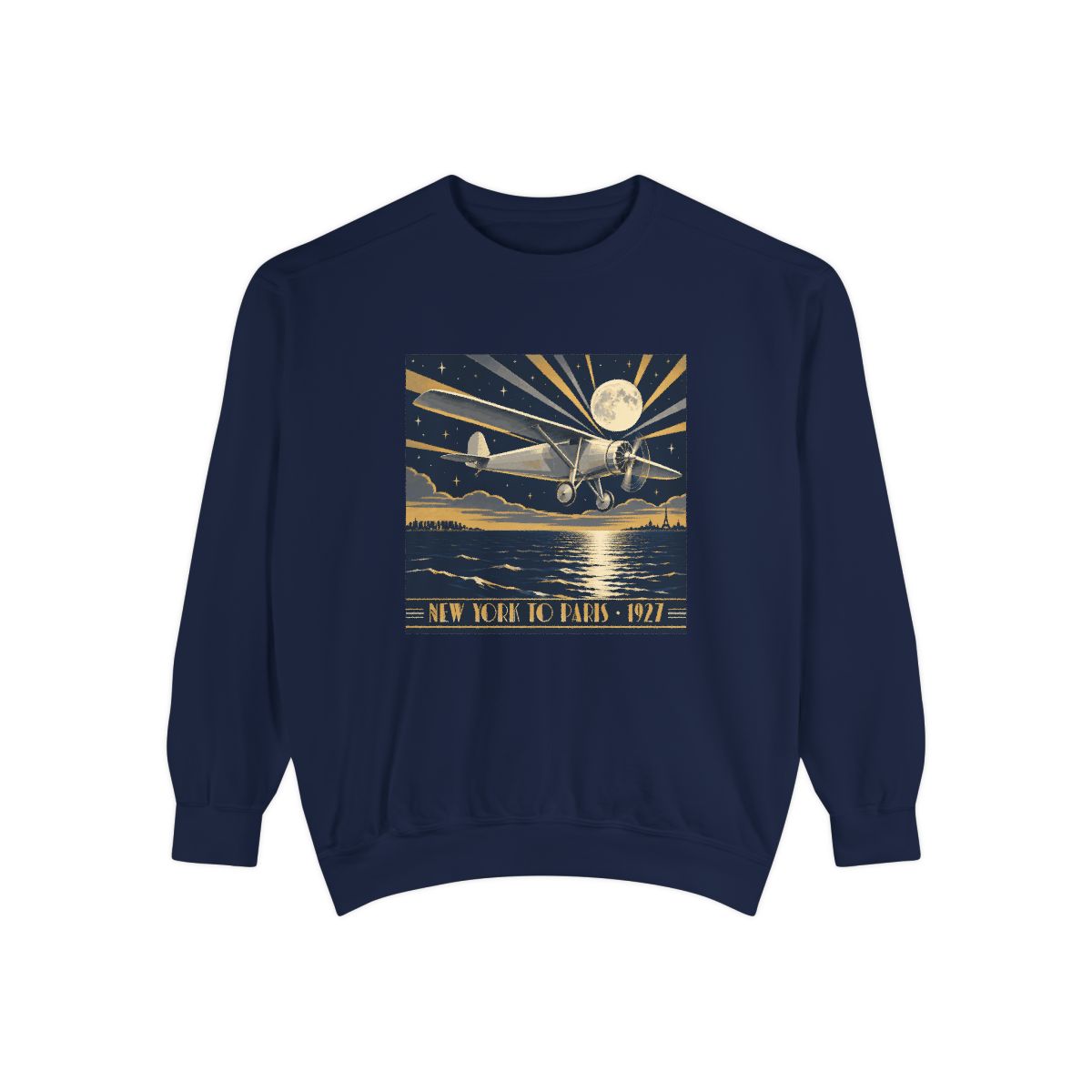
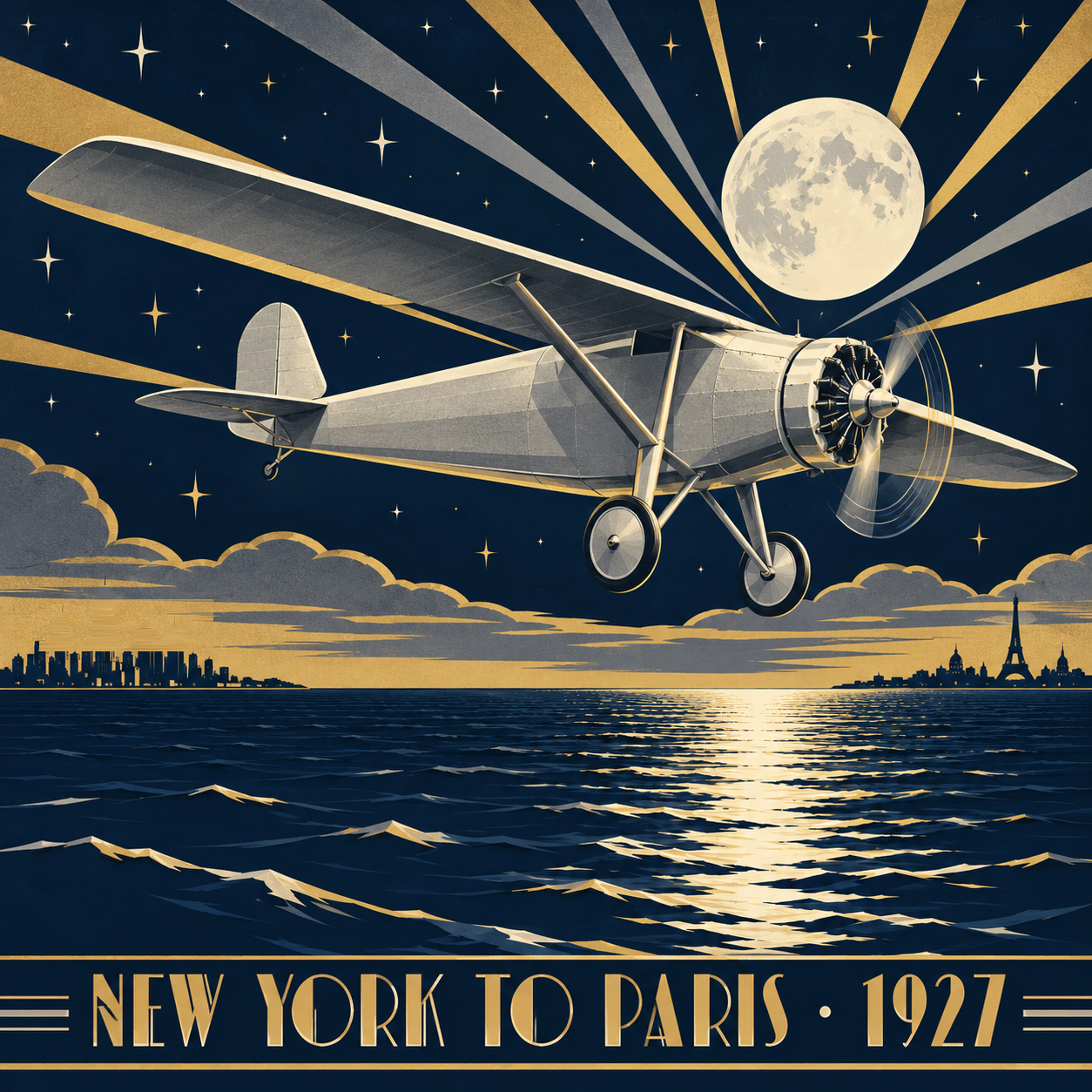
33 Hours New York to Paris Crewneck Sweatshirt
Ryan NYP (Spirit of St. Louis) · Comfort Colors 1566 · 9.5 oz garment-dyed heavyweight fleece crewneck (True Navy, Pepper)
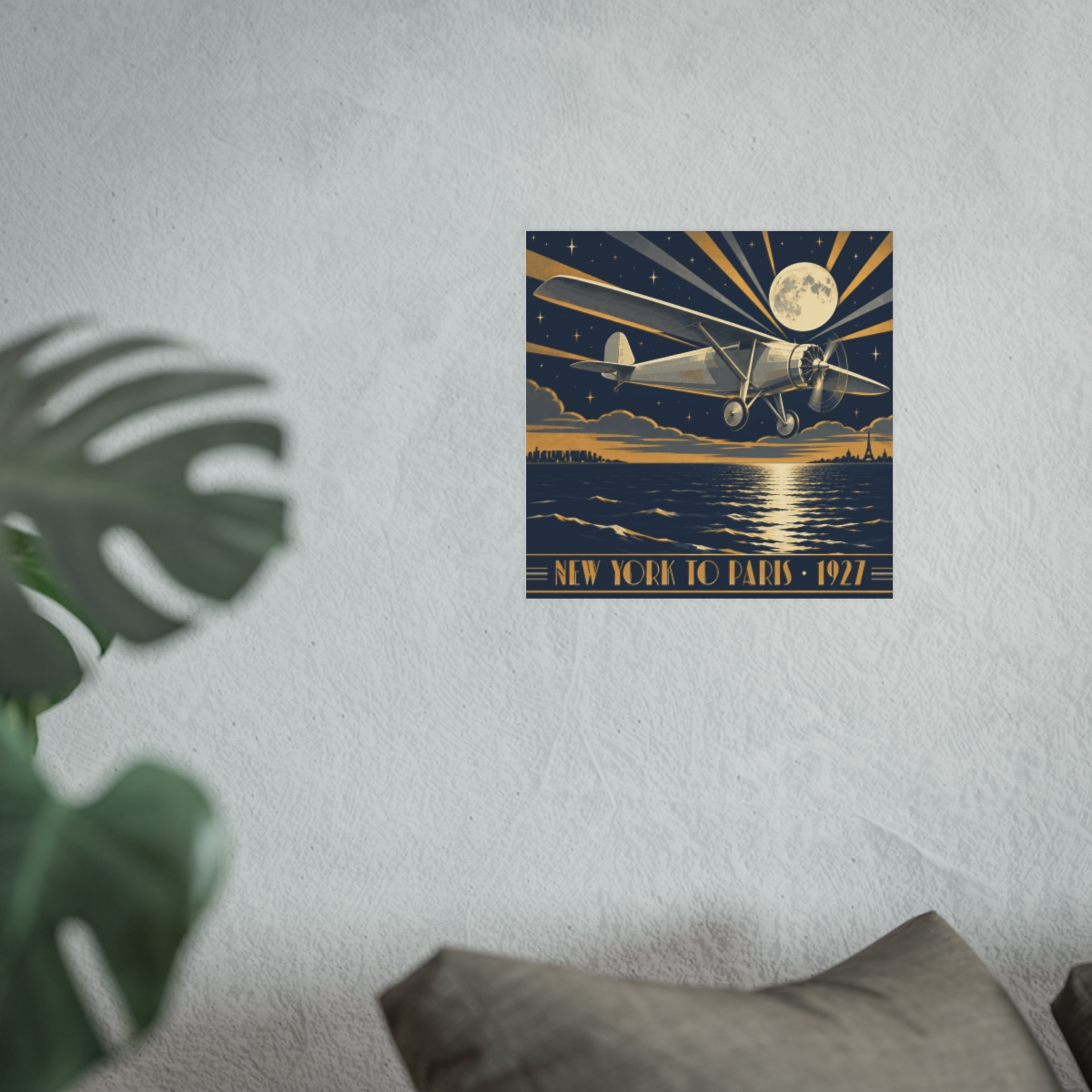
33 Hours New York to Paris Archival Matte Poster
Ryan NYP (Spirit of St. Louis) · Archival museum-grade matte paper (12x12, 11x14, 16x16, 20x20, 18x24)