Ch. 01 // Woodcut 1903$42.00

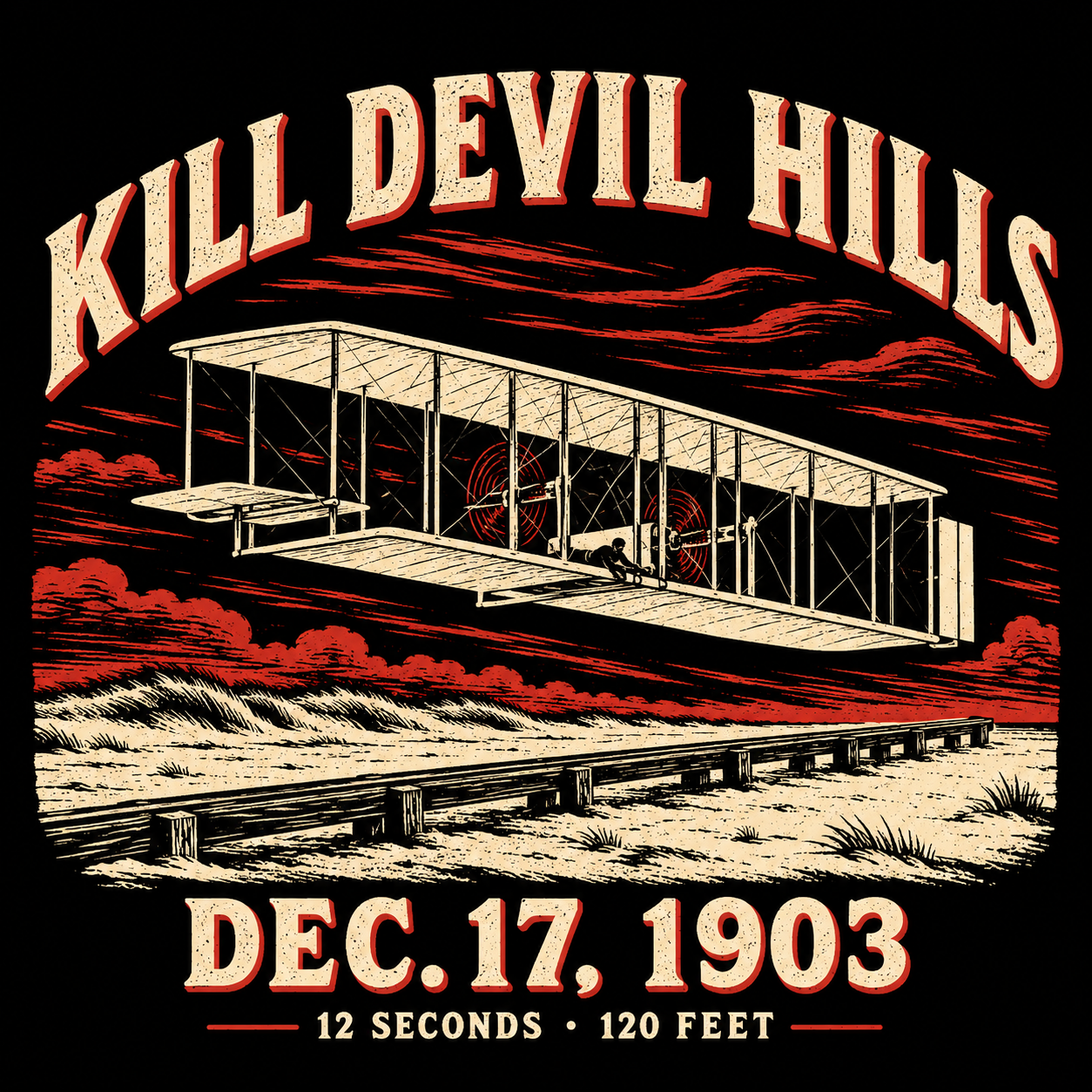
12 Seconds Heavyweight Tee
1903 Wright Flyer I · Comfort Colors 1717 · 6.1 oz 100% ring-spun garment-dyed cotton (Black, Pepper, Navy)
Vintage aviation t-shirts and long sleeves drawn from real airplanes and real flights, from the 1903 Wright Flyer at Kill Devil Hills to Alan Shepard's Freedom 7 in 1961. Printed to order.
1903 Wright Flyer I · Comfort Colors 1717 · 6.1 oz 100% ring-spun garment-dyed cotton (Black, Pepper, Navy)

1903 Wright Flyer I · The hard part was not the engine. It was keeping a machine steady in air that moved. Between 1900 and 1902 on the Kill Devil Hills dunes, Wilbur and Orville worked out wing-warping, a forward elevator, and a movable rear rudder so the craft could be steered in three axes instead of hoping the wind would be kind. The National Park Service still teaches that lesson from those hills. The chest is the control idea, not a portrait. Long sleeve tee, forty-eight dollars.

1903 Wright Flyer I · Charlie Taylor built the first airplane engine in the Wright bicycle shop in Dayton. In about six weeks he finished an aluminum-block four-cylinder that weighed roughly 180 pounds and made about twelve horsepower, enough for the 1903 machine on the Outer Banks. He was not a famous pilot and he was not on the dunes for the December flights; the shop work still belongs in the story. The chest is the engine. Heavyweight tee, forty-two dollars.

Oscar F. Perdomo became an ace in a single day over the Philippines in 1945, flying a P-47 for the 464th Fighter Squadron. Five victories in one mission is the record the Air Force still cites when it tells that story; his name stays on the shirt because the day was his. The chest is the count and the date the archive keeps. Heavyweight tee, forty-two dollars.

Arthur Van Haren Jr. flew Hellcats from carriers in the Pacific and finished the war as one of the Navy’s higher-scoring aces from that fight. The shirt is not a squadron crest. It is the airplane and the hours that made the record worth keeping in the archive. Heavyweight tee, forty-two dollars.

1903 Wright Flyer I · Departure 1903 is a photography archive of early American flight that happens to sell garments. The house mark is the word DEPARTURE stacked over 1903, set for people who care where the first flights actually left the ground. No airplane outline on this one. Heavyweight tee, forty-two dollars.

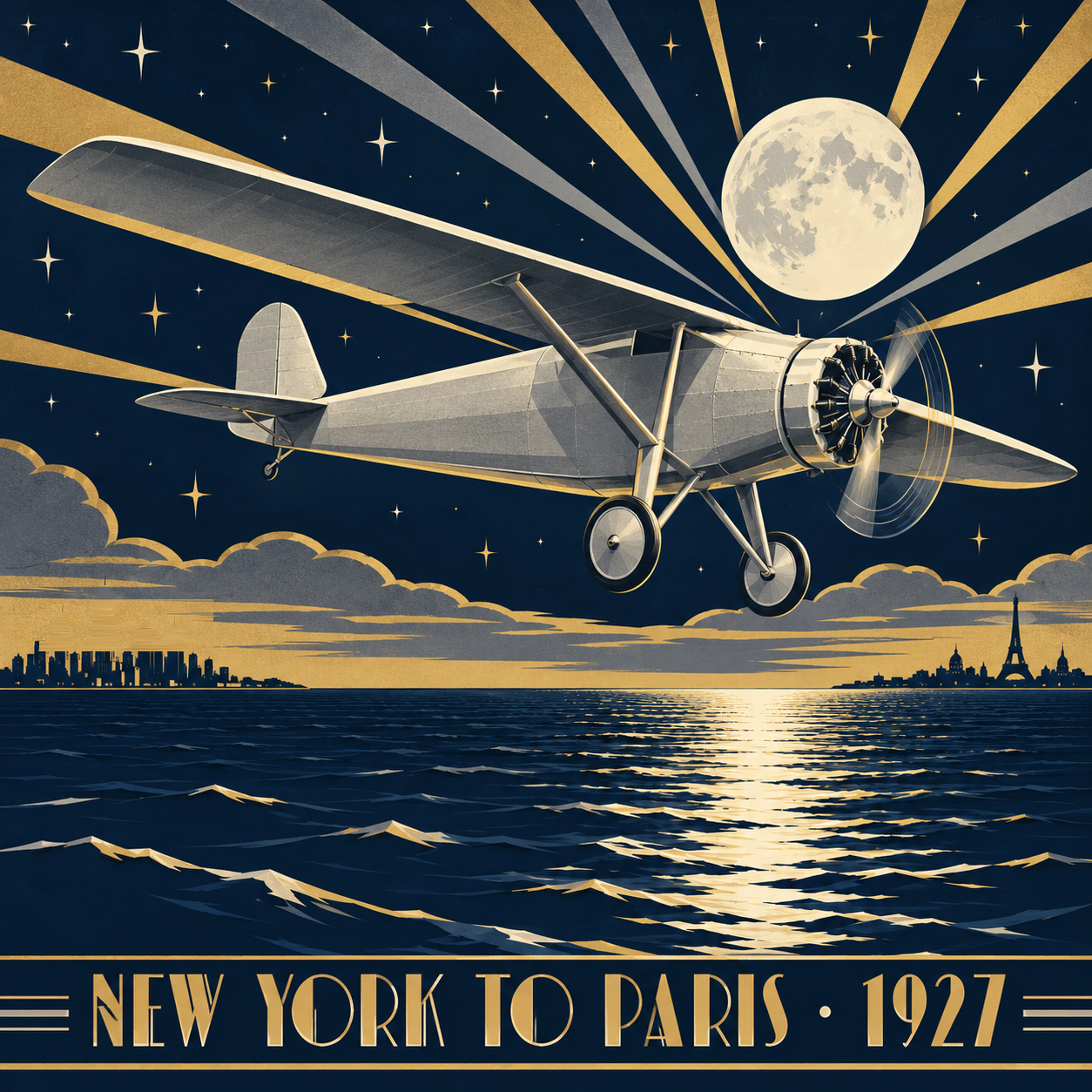
Ryan NYP (Spirit of St. Louis) · The first solo nonstop Atlantic crossing took thirty-three hours and thirty minutes. Charles Lindbergh left Roosevelt Field on Long Island on the morning of 20 May 1927 and landed at Le Bourget, near Paris, the next evening. The National Air and Space Museum keeps the Ryan NYP and records the distance as 3,610 miles. His name is here because that is how you tell the story. The chest only carries the duration and the date. Heavyweight tee, forty-two dollars.

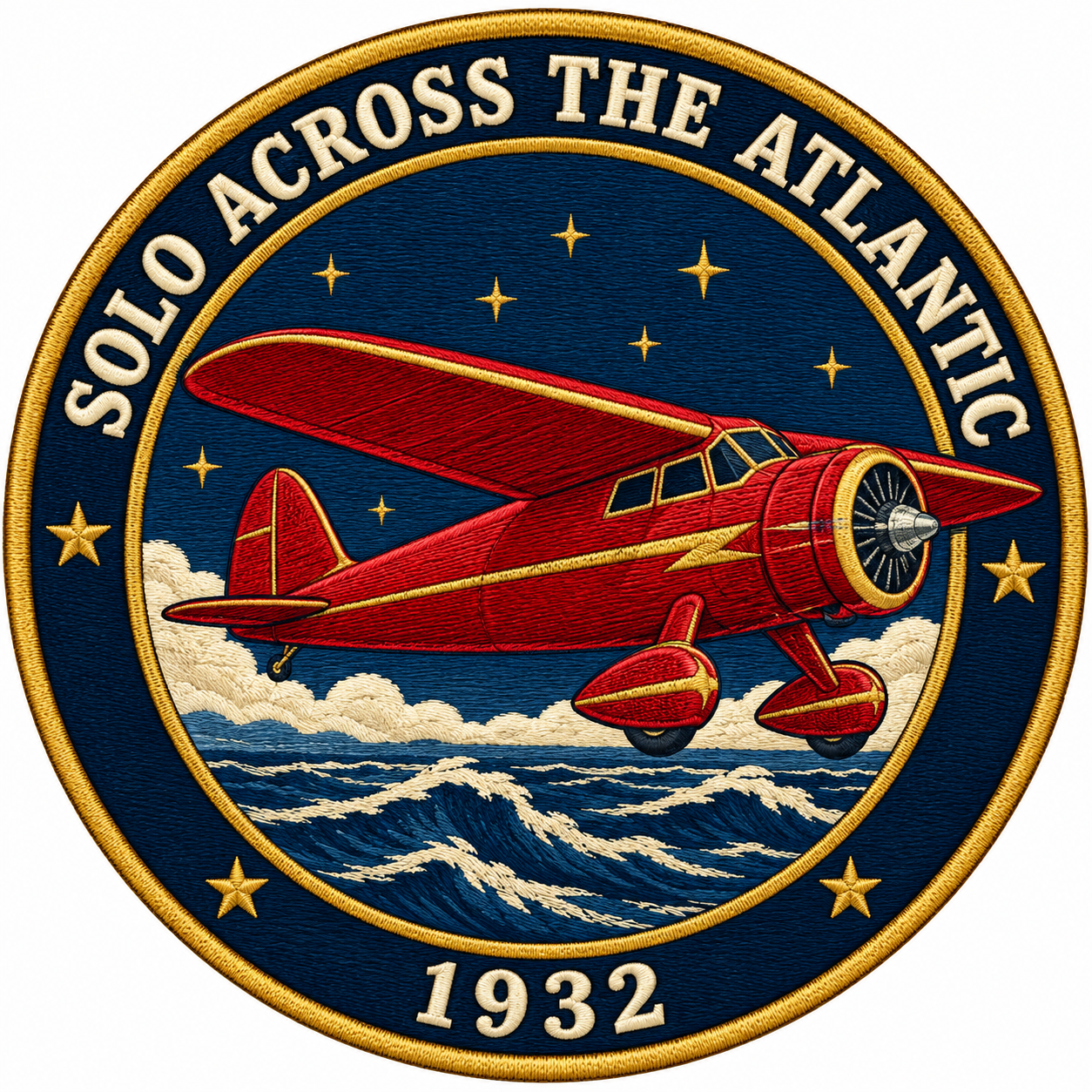
Lockheed Vega 5B · Five years to the day after the New York-Paris solo, Amelia Earhart left Harbour Grace, Newfoundland, in a Lockheed Vega and put it down about fifteen hours later in a farmer's field at Culmore, near Londonderry. The National Air and Space Museum calls that the first solo Atlantic crossing by a woman, and the second by anyone. The museum is careful with the hour, so this garment is too: about fifteen hours, not a tighter number we do not have. Her name is in the sentences. The chest is the duration and the date. Long sleeve, forty-eight dollars.

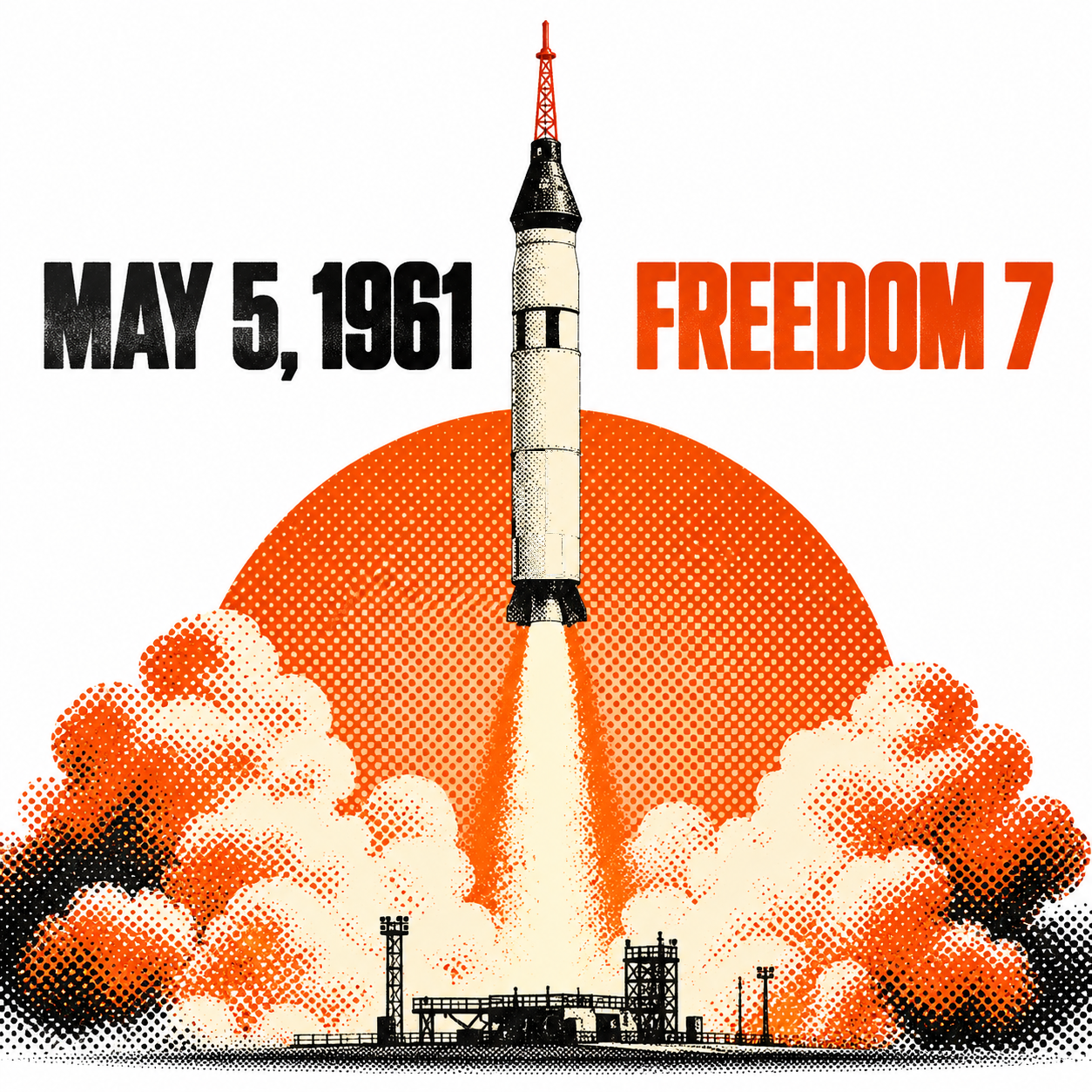
Mercury-Redstone 3 (Freedom 7) · Comfort Colors 1717 · 6.1 oz garment-dyed heavyweight cotton (White, Ivory, Khaki)